DevOps: how we got here

Developer toolset

From the developer point of view, there are some tools involved in the source-to-deploy process

  • Source control management tools: Subversion, Git, Mercurial, Perforce,…
  • Build tools: Maven, Ant, Ivy, Buildr, Graddle, Rake,…
  • Continuous Integration tools: Continuum, Jenkins, Hudson, Bamboo,…
  • Repository (Artifact) management tools: Archiva, Nexus, Artifactory,…
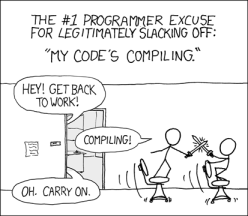
The #1 programmer excuse for legitimately slacking off: My code is compiling

When everything is set together, we can have a CI schedule that is building automatically the changes from the SCM as they are committed, deploying to an artifact repository the result of the build or sending a notification if there is any error. Everything fully automated. A change is made to SCM, the CI server kicks in, builds and runs all sort of tests (unit, functional, integration,…) while you go off for a sword fight with your coworkers.

Now what? somebody sends by email the tarball, zipfile,… to the operations team? oh, no that would be too bad. Just send them the url to download it… And even better send some instructions, a changelog, upgrade task list,…

What developers do today to specify deployments and target environments is not enough. 

The simplest solutions are often the cleverest. They are also usually wrong.

Using tools like Maven in the Java world or Bundle in Rubyland you can explicitly list all the dependencies and versions you need. But there are some critical dependencies that are never set.

It is just too simple.

Packages installed, C libraries, databases, all sort of OS and service level configuration,… That’s the next level of dependencies that should be explicitly listed and automated.

For example, think about versions of libc, postgresql, number of connections allowed, ports opened, opened file descriptors limit,…

Operations

Requirements

From the point of view of the operations team the number of requirements is complex: operating system, kernel version, config files, packages installed,…

And then multiply that for several stage configurations that most likely won’t have the exact same configurations.

  • dev
  • QA
  • pre-production
  • production

Deployment

Deployment of the artifacts produced by the development team is always a challenge

  • How do I deploy this?
  • Reading the documentation provided by the development team?
  • Executing some manual steps?

That is obviously prone to errors

Cloud

It’s nothing new but it has increased with the proliferation of Cloud based environments, making it easier and easier to run dozens or hundreds of servers at any point in time. Even knowing how to deploy to one server, how is it deployed to all those servers? what connections need to be established between servers? how is it going to affect the network?

FOSDEM

The slides from my From Dev to DevOps talk at FOSDEM 2012 Brussels are up in Slideshare. The material is also in the Lanyrd page.

The conference was huge, I’ve heard that over 4000 people showed up this year, for this free (as in both software and beer) event, organized on several tracks. Not bad considering that the temperature was between -15 and -6C (5 and 23 Fahrenheit) and got a lot of snow.

I spoke on the main auditorium with capacity for 1400 people, there was plenty of space. Unfortunately (for me, but great for the other speakers and the organization) some other devrooms got filled quickly, and couldn’t get into the Configuration and Systems Management Devroom, which should have been really good as nobody left as I was waiting outside between talks 😦

A lot of care by the organization, including a note with a 24/7 phone number in case I got “lost/confused/arrested” (which makes me think it must have happened before), and a full commitment to promote belgian beer 😉

And thanks to the people that attended my talk and engaged through twitter, got great feedback and hints for improvements on the future of development and infrastructure automation!

Grand Place 360 panorama

“From Dev to DevOps” at the Paris JUG next week, FOSDEM Brussels in February

The year starts with two speaking engagements, about development and DevOps

Soirée Devops @ Paris JUG

Next week, Tuesday January 10th at the I.S.E.P. Paris

An afternoon about DevOps, with Henri Gomez also speaking, where I’ll be finally able to put faces to some long time online friends and collaborators on different open source projects.

FOSDEM

Sunday February 5th at the ULB Campus Solbosch in Brussels.

the biggest free and non-commercial event organized by and for the community

Interesting conference concept with no registration necessary, around 4000 attendees in 4-6 tracks, completely free, including a Friday Belgium beer event, as they say don’t miss this great opportunity to taste some of the finest beer in Belgium (and, hence, in the world). And they even include spouse/partner tours!

Are you going to any of them? say hi!

About: DevOps

This is the start of a (hopefully) series of posts about DevOps, based on my presentation From Dev to DevOps.

The Agile movement stablished a series of development practices quite common nowadays, or at least highly desired:

  • planning
  • iterative development
  • continuous integration
  • release soon, release often

But what happens after the development cycle? The process of building software or products does not stop there. Even if you are an agile shop, you may hit a wall when trying to move between Development, QA and Operations.

DevOps is a door in that wall.

DevOps is the intersection between Development, QA and Operations. You can also think of it as DevQAOps.

Old issues fixed, new issues come up

As some issues were solved by Agile methodologies, new issues arose. Agile development generates a higher number of releases (release early/release often) than waterfall methodologies, and that pushes the problem from development teams to operations, that have to deal with more frequent deliveries to production.

DevOps addresses

Fear of change

Once a product is working, changes are seen as a risk by business, developers, QA, operations,… Reducing the time to make (and revert!) changes increases the assurance to do more frequent changes.

Risky deployments

Automation, automation, automation! Not only the development needs to be automated. No more docs with instructions, manual steps, individual knowledge, “deployment master” or hacks. All the steps up to production need to be automated too, including deployments, to reduce risk of manual mistakes.

It works on my machine!

With the proliferation of virtualization, cloud, PaaS, stacks,… is absolutely necessary to be able to replicate environments for development, QA, pre-production,… Ensuring that proper level of testing is conducted as the product (software + environment) progresses through the lifecycle.

Siloisation

Teams split in Dev, QA, Ops,… cause walls to stand between them, and unnecessary friction, with each team pushing for its own benefit and requiring escalation of issues to account for the overall business good. Getting all the teams on the same table more often the friction is reduced.

Dev Change vs. Ops stability

Developers are usually measured by the number of features implemented, while operation teams are measured by the performance and stability on production. Two different goals that make both teams clash in many occasions. Bring issues early on and involve all the teams in the decisions.

Read more at What Is This Devops Thing, Anyway?

DevOps is a extension of Agile

Does this sound familiar?

Individuals and interactions over processes and tools

Working software over comprehensive documentation

Customer collaboration over contract negotiation

Responding to change over following a plan

Exactly, that’s the Agile manifesto, which is still perfectly valid, with some clarifications, if we get into detail:

  • Our highest priority is to satisfy the customer through early and continuous delivery of valuable software products.
  • Welcome changing requirements, even late in development any part of the DEV/QA/OPs cycle.  Agile processes harness change for the customer’s competitive advantage.
  • Deliver working software products frequently, from a couple of weeks to a couple of months, with a preference to the shorter timescale.
  • Business people and developers development/QA/Operations teams must work together daily throughout the project.
  • The most efficient and effective method of conveying information to and within a development DEV/QA/OPs team is face-to-face conversation.
  • Agile processes promote sustainable development. The sponsors, developers, QA and OPs teams, and users should be able to maintain a constant pace indefinitely.

What does that exactly mean

  • software/working software. The concept of product, meaning software running, in production
  • late in development. Late in the development, QA or operations phases, not just development
  • developers. Don’t consider only developers, QA and operations teams need to be involved too

The key part is the involvement of not just the development team but the QA and Operations teams.

Game theory

Game theory is defined as the method for analyzing calculated circumstances, such as in games, where a person’s success is based upon the choices of others. If you have watched A beautiful mind, you’ll remember the scene where he tries to pick up a girl at a bar.

What does it have to do with DevOps? The success of the Dev team greatly depends on actions done by the Ops team, good software deployed incorrectly will transmit the wrong impression. Likewise, the success of the Ops team definitely depends on the work of the Dev team, as poorly developed software will cause all sort of performance issues.

If all teams try to achieve their own benefit, it’s not necessarily a good thing for the overall business. Imagine the Ops team not pushing new features because they don’t want to risk the production stability. Or the Dev team pushing new features to production without proper testing because it’s a QA problem, not theirs, and are only measured on the amount of features pushed.

From Dev to DevOps slides from ApacheCON NA Vancouver 2011

ApacheCON NA 2011The slides from my From Dev to DevOps talk at ApacheCON NA 2011 Vancouver. Thanks to all the attendees for coming!

The audio recording seems that it’s going to be uploaded to FeatherCast.

UPDATE: the Lanyrd official page is up too

The code for the Maven-Puppet module is avalable in GitHub, and I’ll write some posts about it in the coming weeks.

The DevOps movement aims to improve communication between developers and operations teams to solve critical issues such as fear of change and risky deployments. But the same way that Agile development would likely fail without continuous integration tools, the DevOps principles need tools to make them real, and provide the automation required to actually be implemented. Most of the so called DevOps tools focus on the operations side, and there should be more than that, the automation must cover the full process, Dev to QA to Ops and be as automated and agile as possible. Tools in each part of the workflow have evolved in their own silos, and with the support of their own target teams. But a true DevOps mentality requires a seamless process from the start of development to the end in production deployments and maintenance, and for a process to be successful there must be tools that take the burden out of humans.

Apache Maven has arguably been the most successful tool for development, project standardization and automation introduced in the last years. On the operations side we have open source tools like Puppet or Chef that are becoming increasingly popular to automate infrastructure maintenance and server provisioning.

In this presentation we will introduce an end-to-end development-to-production process that will take advantage of Maven and Puppet, each of them at their strong points, and open source tools to automate the handover between them, automating continuous build and deployment, continuous delivery, from source code to any number of application servers managed with Puppet, running either in physical hardware or the cloud, handling new continuous integration builds and releases automatically through several stages and environments such as development, QA, and production.

Vancouver harbour panorama

ApacheCON NA Vancouver 2011

ApacheCON NA 2011I’m in Vancouver for ApacheCON NA 2011, where I’ll be speaking on Friday 14:30 about DevOps, From Dev to DevOps, my take on DevOps for people like me interested in DevOps and automation coming from the dev side, and expanding the dev lifecycle all the way to deployment to production. I have previously posted the slides from a another event and will post the updated ones after the talk.

If you are at the conference, come over and say hi!

The DevOps movement aims to improve communication between developers and operations teams to solve critical issues such as fear of change and risky deployments. But the same way that Agile development would likely fail without continuous integration tools, the DevOps principles need tools to make them real, and provide the automation required to actually be implemented. Most of the so called DevOps tools focus on the operations side, and there should be more than that, the automation must cover the full process, Dev to QA to Ops and be as automated and agile as possible. Tools in each part of the workflow have evolved in their own silos, and with the support of their own target teams. But a true DevOps mentality requires a seamless process from the start of development to the end in production deployments and maintenance, and for a process to be successful there must be tools that take the burden out of humans.

Apache Maven has arguably been the most successful tool for development, project standardization and automation introduced in the last years. On the operations side we have open source tools like Puppet or Chef that are becoming increasingly popular to automate infrastructure maintenance and server provisioning.

In this presentation we will introduce an end-to-end development-to-production process that will take advantage of Maven and Puppet, each of them at their strong points, and open source tools to automate the handover between them, automating continuous build and deployment, continuous delivery, from source code to any number of application servers managed with Puppet, running either in physical hardware or the cloud, handling new continuous integration builds and releases automatically through several stages and environments such as development, QA, and production.

Headless VirtualBox with Windows 7 guest

Virtualbox logoContinuing my VirtualBox series, let’s talk about headless VirtualBox.

You can run any VBox machine on headless mode, without the GUI. This is particularly interesting for *nix servers where you don’t want to install the X components, but it’s also interesting for Windows boxes that you can use as servers, in order to save some resources (memory, cpu,…) while it’s running.

Use case

I have a Windows 7 box running VPN software (that only runs in Windows), but I don’t want to use the Windows GUI and keep switching from the Mac to the Windows UI do do some things.

Solution

Configuring VirtualBox

Set an IP for your Windows guest, for easier configuration. You could use port forwarding too, but that’d be more cumbersome.

Install VirtualBox extension pack to enable remote display (VRDP support). In the host install a RDP viewer, for instance, for OS X, Microsoft Remote Desktop client.

Configure the guest vbox, enabling in settings Display -> Remote Display and set authentication method to null for no authentication. There are other options for authentication, if you want to check.

Manage the VM headless with VBoxHeadless and VBoxManage commands


# start the VM

VBoxHeadless -s "Windows 7"

# save VM state

VBoxManage controlvm "Windows 7" savestate

Connect to the running VM with your RDP client as you would do with any Windows box.

Web browsing from the host

Install a proxy server on Windows, FreeProxy for instance, but there should be better options out there.

Use FoxyProxy on Firefox on the host, configuring all the remote VPN urls to go through the Windows server. Then you can connect from your host’s Firefox to any url in the VPN.

SSH and other ports from the host

On the Windows guest, connect with Putty to a SSH server on the VPN side, and configure port forwarding. Then you can connect to your VM ip on the ports you forward and end up in the remote server. You could set a server name on /etc/hosts with the VM ip so it’s easier to remember.

With this setup I can use my Mac Firefox, iTerm and other tools without needing to use the Windows interface.

From Dev to DevOps slides from Agile Spain

Conferencia Agile Spain 2011Updated slides from my “From Dev to DevOps” presentation at the Agile Spain conference in Castellon on October 20th. Thanks to all the attendees for the questions and feedback!

Just some updates on Vagrant, VeeWee, Geppetto, and Puppet-Maven. Next stop, ApacheCON Vancouver!

UPDATE The video is also available (in Spanish) at the UJI web server as Flash and WMV.

From Dev to DevOps slides from Apache Barcamp Spain

Here are the slides from my “From Dev to DevOps” presentation at the Apache Barcamp Spain in Seville on October 8th. Not all that useful without the talking and hand waving 🙂
I’ll be presenting it too at the Agile Spain conference on Thursday, with new slides, and adding some more info on Vagrant, VeeWee, Geppetto, and Puppet-Maven, just ten days after, things evolve really fast! Then, on to present at ApacheCON in Vancouver.

I’ll hopefully find the time to publish here at some point, in the meantime, there’s a good summary about the tools, Setup your devops playground with Puppet, Vagrant & co by Arnaud Heritier.

Apache Barcamp Spain 2011: a summary

Last Saturday the Apache Barcamp Spain took place in Seville. It was the first Apache Software Foundation event in Spain, ever.

The idea started almost a year ago, chatting over at the ApacheCON with the ASF folks that were at the time organizing the Apache Barcamp Sydney and Oxford. I liked the idea and with some hand-waving and crazy ideas was able to convince the other organizers, that you all should know: the local Klicap guys Manuel Recena & Antonio Muñiz that had to handle all the local organization, David Bonilla, who had to jump from plane to plane to get from SF to Seville in two days, and Abel Muiño, that couldn’t attend because he’s having a baby, congrats!. Without them, this event could never, ever happen!

The pre-event

A bit stressful, not what I had in mind for a self organizing barcamp. Thanks to our sponsors we had budget to offer breakfast, coffee & drinks after lunch, t-shirts, streaming, and a party afterwards, so we had to organize all of that plus the usual bits and pieces about venue, wi-fi, getting the word out,…

The event

A full day with 3 tracks, 18 sessions, Barcamp style. 130 people signed up, with tickets lasting less than 5 hours. We asked everybody to confirm attendance one week before the event so we could free up some room for people in the waiting list, but still some people didn’t show up 😦 (the problem with free events) which was compensated by other people showing up without registration that we gladly accepted.

It was great to see many people coming from places all over Spain, considering that they didn’t know what the sessions would be about, flying from the Canary islands, Barcelona, Galicia,… that definitely sets the bar high for the content of the event.

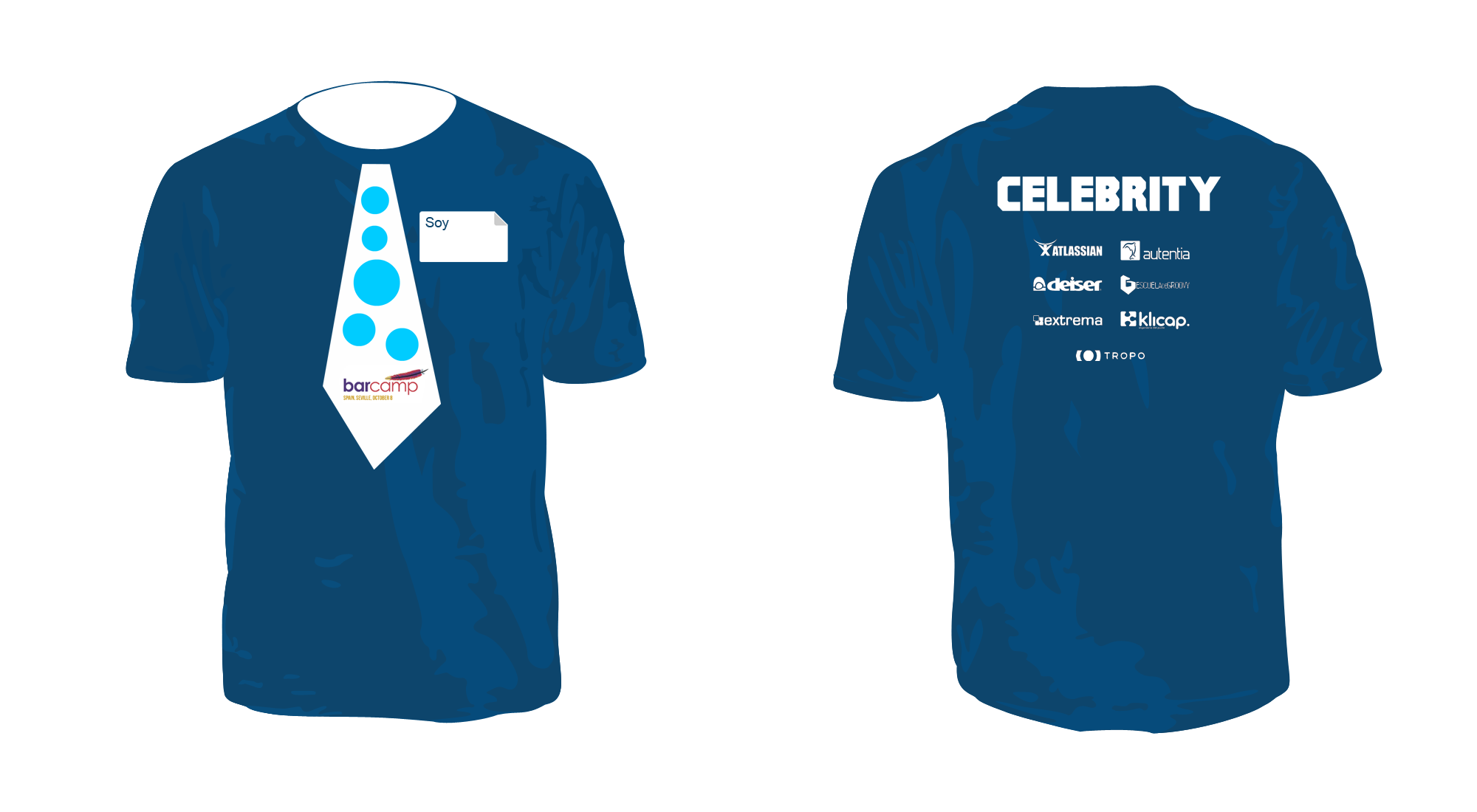
Celebrity t-shirt

The attendees received a free CELEBRITY t-shirt (no kidding) with room to write the name, instead of the usual boring stickers, to encourage people to wear it, which most of them did, plus a Pokemon card (more about that later).

After the initial event introduction, all those attendees that wanted to give a talk came into stage, and we had volunteers not only to fill the 18 sessions, but 27 session proposals! which was a great ratio speakers/attendees.

Votación democrática by Ana Buigues

So everybody had to vote, and we got down to the final 18 sessions. I’d like to thank everybody that suggested a talk even if it wasn’t voted, don’t let it bring you down and try again in other conferences.

Note that if you buy what looks like Post-Its, make sure they stick and are not only colored papers! We had to work around the issue by voting on a table instead of the whiteboards.

There were sessions about CSS, Apache Droids, Apache Maven, Apache Hadoop, Apache James, Apache ServiceMix, Play framework, Python, cloud, GIS, DevOps,…

We had recording/streaming (not without its issues) working in two of the tracks too, the videos will be uploaded to the website soon.

Marea Azul by Aroshni

Marea Azul by Aroshni

Unfortunately, organizing and speaking (I gave a talk about DevOps which I’ll post about soon) didn’t leave much time to do networking, just a bit during the coffee pauses and lunch. And I’d like to have caught up with many of the people that were around, sorry I was running around most of the time, I’ll see you at the next event with more time!

After the sessions we had four lightning talks, which I believe most people were new to the format, but was entertaining, I liked particularly the always funny (if you can get his German-southern Spanish accent) and ASF member Thorsten Scherler, who just got into twitter this week!

The final act was the Pokemon ceremony, which we just made up during the day 🙂 All the speakers went up to the stage, and everybody had to give their Pokemon card to the talk that they liked most, which was quite a fun time. We had an Android tablet ready for the winner, Nacho Coloma, and Amazon gift cards for the 2nd and 3rd, our little way to encourage people to speak and spread their knowledge. We also gave away a gift card to a random twit that used the #barcampes hashtag.

The Party

Flamenco at La Carboneria

Flamenco at La Carboneria

From there on, it was beer time. We went to a typical Flamenco bar in the old part of Seville, La Carboneria. On our way there it was fun to find other attendees wearing the blue t-shirts, which made locals refer to us as the smurf tide.

At the bar we had waiting for us free beers, a private area with tons of food, serrano ham, cheese, tortilla,… very typical Spanish, and three Flamenco shows during the night, plus a patio where most people gathered to talk.

After we closed the place at 3am we moved on to other places in the city, but that’s a different story…

The numbers

  • 130 attendees
  • 27 suggested talks
  • 18 sessions
  • 3 Flamenco shows
  • 37 tortillas
  • 37 serrano ham & chees plates
  • 44 olive plates
  • 945 beers (310 liters or almost 3 liters per person!)

The sponsors

Thanks to all the sponsors (Klicap, Extrema Sistemas, Atlassian, Deiser, Escuela de Groovy, Tropo, Autentia) for their collaboration and help to make this event so successful!

Photos

StartingLa carboneriaLa Carboneria se esta calentandoBarcamp partyFlamenco at the Apache Barcamp partyFlamenco at the Apache Barcamp Spain

More photos in Flickr

Tagged photos in Flickr